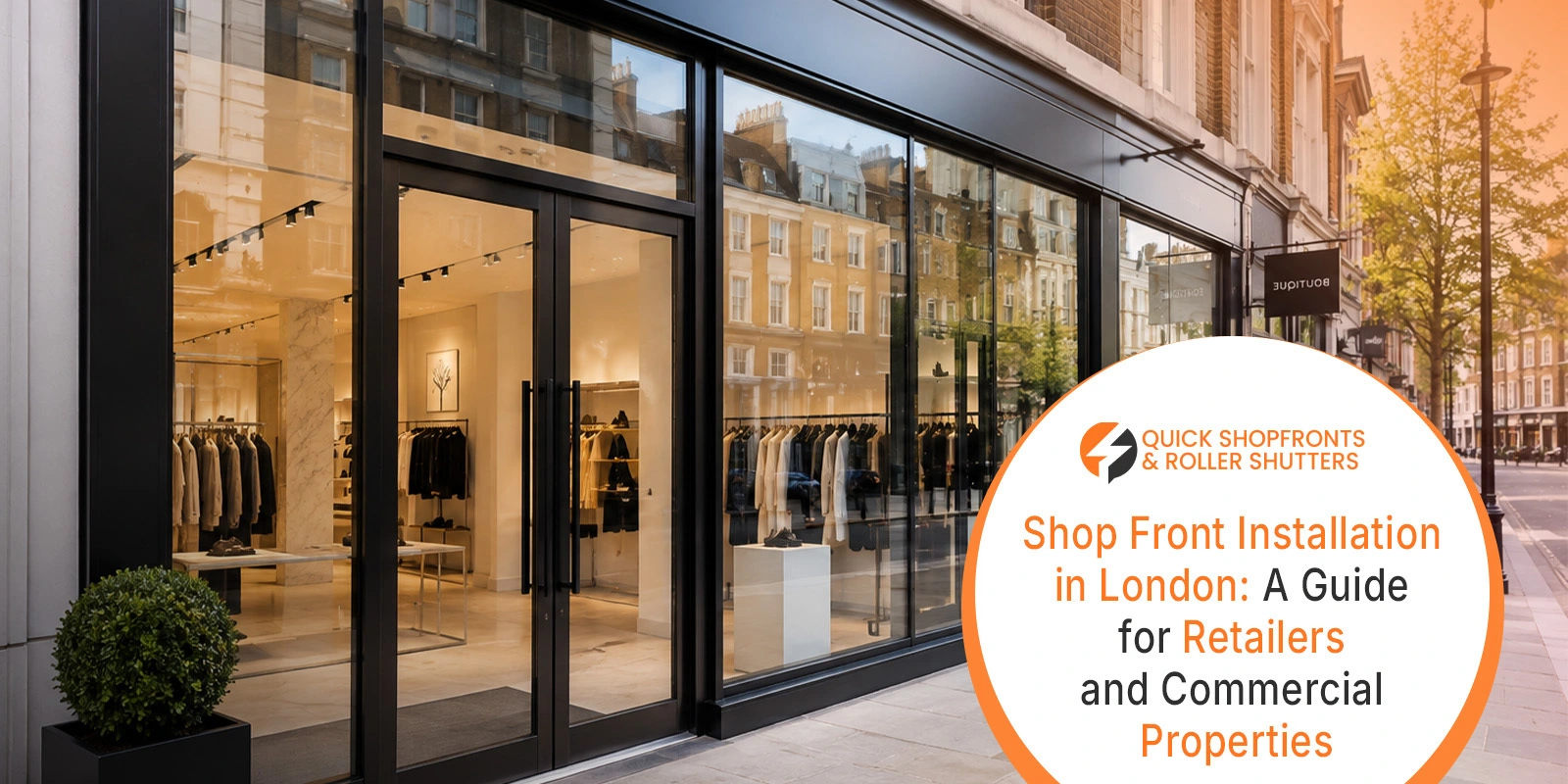
London does not give businesses much room for a bad first impression. On streets where footfall is high, competition is visible, and passing trade can make the difference between a quiet week and a strong one, the front of your premises is earning its keep, or failing to, from the moment someone walks past.
Shop Front Installation is one of those projects that businesses often delay longer than they should, usually because it feels like a significant undertaking.
In practice, for most London retail and commercial premises, it is more straightforward than it looks, and the difference it makes to how a business presents itself is immediate.
What London’s Commercial Streets Actually Demand
It does not take long to see what this means when walking through the busy streets of London. It is not necessarily the biggest businesses that attract customers but the business whose front creates an impression of openness, quality, and welcome.
The proper shop front installation for London business does three things at once. First of all, it creates the image of the business. Secondly, it controls the light and visibility and, finally, it provides the building with sufficient security and weather protection.
What complicates the situation in London is that there can be no two identical premises. There are different buildings, from the Georgian unit in Notting Hill to the railway arch in Bermondsey or the shop on the ground floor of a building in Stratford.
If a business tries to ignore the differences and use a universal approach to shop front installation, the result is almost inevitable.
When Glass Replacement Makes More Sense Than a Full Refit
Not every frontage project needs to start from scratch. For many London premises, the existing frame is structurally sound and the profile is still appropriate, what has let the frontage down is the glazing itself.
Older glass yellows, scratches, loses its clarity, and in many cases was never specified to the standard that modern shopfront glass replacement delivers.
Replacing the glazing alone, with toughened safety glass, double-glazed units for improved thermal performance, or laminated glass for higher-risk locations, can transform the look and feel of a frontage at a fraction of the cost of a full installation.
Shopfront glass replacement also offers the opportunity to upgrade the performance of the frontage significantly: a business that moves from single-glazed to a double-glazed unit will notice the difference in heat retention and noise reduction almost immediately, particularly on a busy London street where ambient noise is a constant.
The choice whether to go for glass replacement or shop front installation depends on answering two questions, namely whether the current frame is in good shape and whether it reflects the image that the company is trying to project.
In case the answer is yes to both questions, then it would be better to go for the replacement of the glass. Otherwise, the installation is more economical than glass replacement.
Why the Material Choice Matters More Than Most People Think?
Most of the new commercial frontages installed in London are made of aluminium, and there are solid pragmatic reasons behind it rather than just fashion trends. Aluminium shop fronts commissioned by London companies are dimensionally stable.
They also do not require as much maintenance work as painted wood, and their finish will remain intact for many years under adverse urban conditions.
They can be coated with powder in any colour, thus allowing the company to get a unique façade while staying consistent with its brand.
Thermally broken aluminium profiles, when an insulation is incorporated in the aluminium profile, are far superior in terms of energy efficiency to the older non-broken profiles.
It is especially important for a London retail premises open around the clock and losing energy on every entrance of a customer to the store.
Contemporary aluminium shop fronts used by London companies are also much lighter in construction compared to older designs, giving more space to glass and thus allowing more light to come inside.
What to Check Before You Start
London’s planning landscape is more complex than most UK cities, and any frontage upgrade project that skips the planning check at the beginning can end up in expensive difficulty.
Large parts of central and inner London fall within conservation area designations, Islington, Kensington and Chelsea, Southwark, Westminster, Camden, where changes to commercial frontages require prior consent from the local planning authority.
In these areas, the material, colour, glazing proportion, and even the style of signage integration may be subject to specific conditions.
An experienced installer who knows the local planning context will identify the position for your premises as a first step, not an afterthought, and will advise on what is and is not likely to be consented based on local policy and precedent. Getting this right at the start saves considerable time and cost further down the line.
A well-thought-out shop front installation in London is amongst the most commercially profitable ventures for a retailer or property investor, and it is not as difficult and disruptive as people think it can be.
Whether the venture involves the installation of shop front glazing to give a new look to the façade which is good as it is, whether it involves the installation of a complete shop front by utilizing aluminium shop fronts London business owners trust, or whether it involves a properly thought-out improvement in a conservation area in terms of shop front London installation, the best way to go about it would be to know exactly what the premises need.
Frequently Asked Questions (FAQs)
1. How long does shop front installation typically take in London?
Most single-unit retail installations complete within one to two days; projects in conservation areas requiring planning consent will need additional lead time of four to eight weeks before installation can begin.
2. When does shopfront glass replacement make more sense than a full refit?
When the existing frame is structurally sound and still suits the premises aesthetically, replacing the glazing alone is significantly more cost-effective and can still dramatically improve the frontage’s appearance and thermal performance.
3. Do aluminium shop fronts require planning permission in London?
In conservation areas, which cover a large proportion of inner London, changes to shopfront materials and appearance typically require prior consent; always verify with your local borough planning department before ordering.
4. What type of glass is recommended for London retail frontages?
Toughened safety glass is the standard minimum; laminated glass is preferred for premises with higher security requirements or overnight exposure, and double-glazed units are increasingly specified for their thermal and acoustic benefits.
5. How do I choose between a full shop front installation and glass replacement only?
Assess the condition and appearance of the existing frame, if it is structurally sound and visually appropriate for the business, replacement glazing is usually the better value option; if the frame is dated or damaged, a full installation delivers better long-term results.